

Could a spoonful of honey work better than store-bought cough syrup?
It sounds wild, but research suggests honey can quiet a cough, especially at night, by coating the throat, thinning mucus, and calming irritated nerve endings.
Raw honey also brings mild anti-inflammatory and antimicrobial effects that can help when a cough comes from a cold.
This post shows how honey soothes coughing, safe ways to use it at home, who should avoid it, and when to get checked, so you can try it wisely and sleep better.
How Honey Provides Fast Cough Relief

When you swallow a teaspoon of honey, you’re getting a thick, sticky coating over your throat. That layer sits on top of irritated nerve endings and cough receptors, which cuts down the reflex urge to cough. Honey also thins mucus, so you can clear your airway without setting off another round of hacking.
Raw honey carries anti-inflammatory and antimicrobial compounds that calm swollen airway tissue. Enzymes, phenolic compounds, and trace amounts of hydrogen peroxide reduce inflammation and slow bacterial growth. Those properties are especially helpful when your cough comes from an upper respiratory infection.
One of honey’s best tricks is reducing nighttime coughing and improving sleep. Clinical trials consistently show that people who take honey before bed cough less during the night and sleep better. That matters because uninterrupted rest speeds recovery.
How honey soothes a cough:
- Coats irritated throat receptors, lowering the cough reflex
- Thins respiratory mucus and reduces post-nasal drip
- Delivers anti-inflammatory compounds that calm swollen airway tissue
- Reduces cough frequency through mild antimicrobial action
- Supports deeper, more restorative sleep when taken before bed
Multiple systematic reviews and randomized controlled trials back this up. In pediatric studies comparing honey to placebo or no treatment, kids who got a bedtime dose of honey showed measurable drops in cough severity and nighttime waking. Some trials even found honey outperformed single doses of dextromethorphan or diphenhydramine, two common OTC cough suppressants. For mild to moderate coughs from upper respiratory infections, honey’s a reliable option.
Using Honey as a Cough Remedy at Home

Taking honey for a cough is straightforward. You can swallow a teaspoon or two straight, or stir it into warm water, herbal tea, or warm milk. Lots of people add lemon juice or fresh grated ginger for flavor and mild antimicrobial benefits. Just let hot liquids cool to warm before adding honey, because high heat destroys some of honey’s beneficial enzymes.
Timing matters. Most clinical trials gave honey 20 to 30 minutes before bedtime, and that works well at home. Taking honey close to sleep lets the coating effect last through the night, cutting down on coughing fits that wake you up. If you’re using honey during the day, you can take a teaspoon or two every few hours as needed. Just don’t overdo it, since honey’s calorie-dense.
How to prepare honey remedies safely:
- Measure 1 to 2 teaspoons of honey for children aged 1 year and older, or 1 tablespoon for adults.
- If using hot beverages, let the liquid cool to warm before stirring in the honey.
- For a simple honey-lemon drink, combine 1 tablespoon honey and 1 tablespoon fresh lemon juice in 8 ounces of warm water.
- For honey-ginger tea, steep 1 teaspoon of fresh grated ginger in 8 ounces of hot water for 5 to 10 minutes, strain, cool slightly, then add 1 tablespoon of honey.
- Give the dose 20 to 30 minutes before bedtime for best overnight cough relief.
- Store honey at room temperature in a sealed container to preserve quality and prevent contamination.
For dry coughs where your throat feels scratchy and raw, honey’s viscous coating is especially soothing. You can take it straight or in warm tea to coat the throat quickly. For wet coughs when you’re bringing up mucus, honey can still help by thinning secretions and calming inflamed tissue that triggers the cough reflex. Either way, keep it simple, keep it warm but not hot, and take it consistently.
Recommended Honey Dosage for Cough Relief by Age

Kids aged 1 year and older can safely take honey for cough relief. Most pediatric trials used a single dose of 1 teaspoon (about 5 milliliters) to 2 teaspoons (about 10 milliliters) given once at bedtime. That’s usually enough to reduce cough frequency and improve sleep overnight. For daytime use in older children who can swallow safely, you can give 1 teaspoon every few hours, but don’t give more than a few teaspoons in one day to keep sugar intake reasonable.
Adults typically take 1 tablespoon (about 15 milliliters) of honey for cough relief. You can take 1 tablespoon up to three times per day—once in the morning, once in the afternoon, and once before bed—or simply use a single bedtime dose if nighttime cough is your main concern. Many adults find that one tablespoon 30 minutes before sleep gives solid overnight relief.
Honey is sugar. One teaspoon has about 21 calories and roughly 6 grams of carbohydrate. One tablespoon has about 64 calories and 17 grams of sugar. If you have diabetes or need to watch your blood glucose closely, account for honey in your daily carbohydrate budget and use it in moderation. For most people without metabolic restrictions, the small amounts used for cough relief are safe and well tolerated.
| Age Group | Dose | Notes |
|---|---|---|
| Infants under 12 months | Do not use | Risk of infant botulism, absolute contraindication |
| Children 1 year and older | 1 to 2 teaspoons once at bedtime or as needed | About 5 to 10 mL; may mix into warm water or tea |
| Adults | 1 tablespoon up to 3 times daily or once before bed | About 15 mL per dose; 64 kcal and 17 g sugar per tablespoon |
Safety Rules for Using Honey for a Cough

Never give honey to infants younger than 12 months. Honey can contain dormant spores of Clostridium botulinum, the bacteria that cause infant botulism. Infants’ digestive systems aren’t mature enough to prevent those spores from germinating and producing toxin. Infant botulism is rare, but it’s serious and can be life-threatening. Most cases occur in babies between about 2 months and 8 months of age, but the risk exists through the entire first year.
If you’re caring for an infant and see any of the following symptoms, seek emergency medical care immediately. Botulism can progress quickly, and early treatment is critical.
Symptoms of infant botulism:
- Difficulty swallowing or trouble sucking during feeding
- Trouble speaking or making normal vocalizations (weak cry)
- Dry mouth or thick saliva
- Blurred or double vision
- Drooping eyelids
- Trouble breathing or weak, shallow breaths
- Nausea, vomiting, or constipation
- Bilateral facial weakness or generalized muscle weakness and floppiness (sometimes called “floppy baby syndrome”)
- Paralysis that can spread from the face and head downward
For children aged 1 year and older, honey’s considered safe. To reduce any residual contamination risk in young children, some experts suggest choosing pasteurized honey over raw honey, though pasteurization doesn’t eliminate all spores. In practice, most families use whatever honey is in the pantry without incident, but if you prefer extra caution, look for a pasteurized product.
Allergic reactions to honey are uncommon but possible. If you or your child has known allergies to bee products or certain pollens, try a very small amount of honey first and watch for itching, hives, swelling, or breathing trouble. Stop use and seek care if any allergic symptoms appear. Honey’s also high in natural sugars. If you have diabetes, prediabetes, or need to limit sugar intake for any reason, use honey in moderation and count it toward your daily carbohydrate total. One tablespoon of honey raises blood glucose similarly to one tablespoon of table sugar.
Clinical Evidence Supporting Honey for Cough Relief

Honey’s reputation as a cough remedy is backed by modern research, not just tradition. Multiple randomized controlled trials and systematic reviews published from the 2000s through the 2020s consistently show that honey reduces cough frequency, decreases cough severity, and improves sleep quality in people with acute upper respiratory infections. These benefits appear after a single dose and hold up over short courses of one to seven days.
Most of the high-quality trials enrolled children with nighttime cough from colds or upper respiratory infections. In these studies, kids who got a bedtime dose of honey had fewer coughing episodes during the night and slept better than children who received placebo or no treatment. Parents also reported feeling less bothered by their child’s cough when honey was used. The effects are moderate but meaningful. Honey doesn’t cure the underlying infection, but it reliably eases symptoms.
Key Trial Findings
Several pediatric randomized controlled trials compared honey directly to common over-the-counter cough medicines. In one well-known study, children received either a single dose of honey, a dose of dextromethorphan (a common OTC cough suppressant), a dose of diphenhydramine (an antihistamine with sedative effects), or no treatment. Honey performed as well as or better than both medications for reducing nighttime cough and improving sleep, and it did so without the side effects those medicines can cause.
Adult data is more limited but points in the same direction. Smaller trials and observational studies in adults with acute cough from upper respiratory infections found that honey reduced symptom severity and improved subjective well-being. The evidence quality in adults is lower than in children, mostly because fewer large, well-designed trials have been done, but the available data support honey as a safe and effective option for adults too.
Comparison With OTC Medicines
Over-the-counter cough suppressants like dextromethorphan work by acting on the brain’s cough center to reduce the urge to cough. Diphenhydramine, an antihistamine, has mild cough-suppressing effects and causes drowsiness, which can help sleep but often leaves people groggy the next day. Both medications have side-effect profiles that include dizziness, nausea, and, in young children, potential risks that have led major pediatric organizations to recommend against their routine use in children under 4 years old.
Honey, by contrast, has almost no side effects apart from rare allergic reactions and the need to account for its sugar content. It works locally in the throat rather than systemically in the brain, and it carries additional anti-inflammatory and antimicrobial benefits that OTC medicines don’t provide. In head-to-head trials, honey matched or outperformed these medications for symptom relief, making it a safer first-line option, especially for young children.
| Study Type | Participants | Honey Dose | Key Outcome |
|---|---|---|---|
| Randomized controlled trial (pediatric) | Children aged 1 to 5 years with nighttime cough | Single 10 mL dose at bedtime | Significant reduction in cough frequency and improved sleep vs placebo |
| Comparative RCT (pediatric) | Children aged 2 to 18 years with URI cough | 5 to 10 mL single dose vs dextromethorphan and diphenhydramine | Honey equal or superior to both OTC drugs for symptom relief and sleep |
| Systematic review and meta-analysis | Children and adults with acute cough | Variable (typically 5 to 15 mL once or twice daily) | Moderate-quality evidence showing honey reduces cough severity and duration |
| Observational cohort (adults) | Adults with acute upper respiratory infection | 15 mL up to 3 times daily for 3 to 5 days | Self-reported improvement in cough and throat discomfort |
Choosing the Best Types of Honey for Cough Relief

Not all honey is the same. Raw, minimally processed honey retains more of its natural enzymes, antioxidants, and pollen than heavily filtered or pasteurized honey. Those compounds contribute to honey’s anti-inflammatory and antimicrobial effects, so choosing raw honey may offer slightly stronger benefits for cough relief. Raw honey’s usually cloudier and may crystallize over time, which is normal and doesn’t reduce its effectiveness.
Color also matters. Darker honeys like buckwheat, forest, or certain wildflower varieties tend to have higher concentrations of antioxidants and phenolic compounds than light-colored honeys like clover or acacia. If you’re choosing between two jars at the store and one’s darker, the darker honey is often the better pick for therapeutic use. That said, even light-colored, common supermarket honey will help soothe a cough. You don’t need an exotic variety to see benefits.
Manuka honey, harvested from bees that pollinate the Manuka bush in New Zealand and Australia, has become popular for its strong antimicrobial properties. Manuka honey contains a compound called methylglyoxal (MGO), and jars are often labeled with MGO ratings or Unique Manuka Factor (UMF) ratings that indicate antimicrobial potency. Higher numbers mean stronger activity. While Manuka honey has proven antimicrobial effects in lab studies and wound care, there’s limited evidence that it works better than other raw honeys for cough relief specifically. It’s a fine choice if you already have it or want to try it, but it’s not necessary, and it’s expensive. Often $30 to $60 or more for a small jar, compared to $5 to $15 for a standard jar of clover or wildflower honey.
Benefits of different honey types for cough:
- Raw honey: Retains natural enzymes, antioxidants, and anti-inflammatory compounds; minimally processed.
- Dark honeys (buckwheat, forest, dark wildflower): Higher antioxidant levels; stronger flavor; often less refined.
- Manuka honey (UMF or MGO-rated): Strong antimicrobial activity due to methylglyoxal; premium price; clinical superiority for cough unproven.
- Common clover or wildflower honey: Widely available, affordable, effective for symptom relief; good everyday option.
When shopping, check the ingredient list. Pure honey should list only one ingredient: honey. Avoid products that blend honey with corn syrup, sugar, or other fillers. They dilute the beneficial compounds and add empty calories. If you want the full therapeutic benefit, stick to pure, preferably raw or minimally processed honey, and choose darker varieties when you can.
Homemade Honey Cough Remedies and Recipes

Making your own honey-based cough remedies at home is easy, affordable, and lets you control exactly what goes into your body. Simple mixtures of honey, lemon, and ginger are time-tested combinations that add mild antimicrobial and anti-inflammatory benefits on top of honey’s soothing effects. You don’t need fancy equipment. Just a mug, a spoon, and a few pantry staples.
Home recipes work best when you prepare them fresh and use them within a day or two. That keeps the ingredients potent and reduces the risk of contamination. Always remember the temperature rule: let hot liquids cool to warm before adding honey, because heat above about 40 to 50 degrees Celsius can degrade honey’s enzymes and reduce its effectiveness.
Honey-Lemon Tea
Combine 1 tablespoon of honey with 1 tablespoon of fresh lemon juice in a mug. Add 8 ounces (about 240 milliliters) of hot water and stir until the honey dissolves. Let the mixture cool to a comfortable sipping temperature, warm but not scalding. Sip slowly, letting the liquid coat your throat. You can drink this up to three times a day for adults, or once before bed for maximum overnight relief. For children over 1 year old, use 1 teaspoon of honey and 1 teaspoon of lemon juice in 4 to 6 ounces of warm water.
Honey-Ginger Mixture
Peel and grate about 1 teaspoon of fresh ginger root. Place the grated ginger in 8 ounces of just-boiled water and let it steep for 5 to 10 minutes. Strain out the ginger pieces, then let the liquid cool to warm. Stir in 1 tablespoon of honey. Sip slowly. Ginger adds its own anti-inflammatory and mild antimicrobial properties, and lots of people find the warming sensation soothing. Adults can drink this two to three times daily. For children over 1 year, use half the ginger and 1 teaspoon of honey in a smaller volume of water.
Simple Honey Nighttime Dose for Children
For children aged 1 year and older, the easiest method is to give 1 teaspoon of honey straight from the spoon about 20 to 30 minutes before bed. If your child doesn’t like the texture or taste of plain honey, you can stir 1 teaspoon into 2 to 4 ounces of warm water or caffeine-free herbal tea, like chamomile. Let your child sip it slowly, then brush their teeth before sleep to protect against cavities. One dose at bedtime is usually enough to reduce nighttime coughing and improve sleep quality.
Recipe safety tips:
- Always check that honey is the only ingredient listed on the jar. Avoid blends with added sugar or corn syrup.
- Let hot beverages cool to warm before adding honey to preserve beneficial enzymes.
- Use fresh lemon juice and fresh ginger for best flavor and potency; bottled versions work but may be less effective.
- Store any leftover honey remedy in the refrigerator and use within 24 hours; discard if it smells off or looks cloudy.
- Don’t give honey-based remedies to infants under 12 months under any circumstances.
How Honey Compares With OTC Cough Medicines
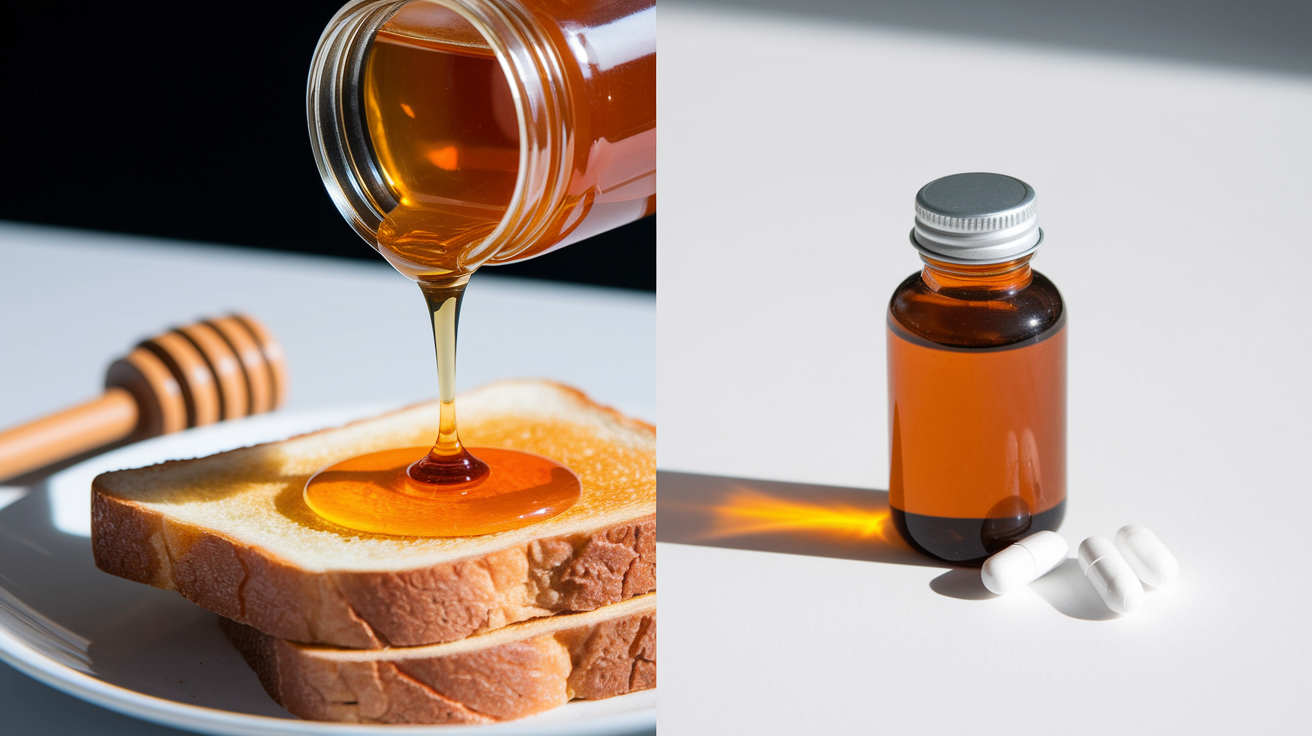
Over-the-counter cough medicines typically contain one or more active ingredients: dextromethorphan (a cough suppressant), guaifenesin (an expectorant), or antihistamines like diphenhydramine. These medications work through different mechanisms. Dextromethorphan acts on the brain’s cough center, guaifenesin thins mucus, and antihistamines dry secretions and cause drowsiness. They can be effective, but they also carry side effects. Dextromethorphan can cause dizziness and nausea. Diphenhydramine often leaves people feeling groggy or “hung over” the next day. Guaifenesin’s generally well tolerated but doesn’t always provide noticeable symptom relief.
Honey works differently. It acts locally in the throat, coating irritated tissue and calming the cough reflex without affecting your central nervous system. Because it’s a food, not a drug, honey has almost no side effects beyond the rare allergic reaction and the need to account for its sugar content. In randomized trials comparing honey to dextromethorphan and diphenhydramine, honey performed as well or better for reducing nighttime cough in children, and parents reported fewer concerns about side effects.
| Treatment | Pros | Cons |
|---|---|---|
| Honey | Natural, few side effects, safe for children aged 1 year and up, anti-inflammatory and antimicrobial, improves sleep | Not safe for infants under 12 months, high in sugar, doesn’t treat underlying infection |
| Dextromethorphan (OTC suppressant) | Widely available, works on cough reflex in the brain | Can cause dizziness, nausea; not recommended for young children; doesn’t reduce inflammation |
| Diphenhydramine (antihistamine) | Sedating, may help sleep | Causes next-day drowsiness, dry mouth; not ideal for children; can impair daytime function |
You can use honey alongside some over-the-counter medicines safely. For example, taking honey at bedtime and using an expectorant during the day. But always check with a clinician or pharmacist first to avoid unintended interactions or doubling up on sedating effects. For most mild coughs from colds or upper respiratory infections, honey’s a safer and equally effective first choice, especially in children.
When a Cough Needs Medical Attention Despite Honey Use

Honey’s effective for mild to moderate coughs caused by common colds and upper respiratory infections, but it’s not a cure-all. If your cough lasts more than 10 days without improvement, or if it persists beyond 2 to 3 weeks and seems to be getting worse, schedule an appointment with a clinician. A cough that lasts 8 weeks or longer is considered chronic and requires a full medical evaluation to rule out conditions like asthma, chronic bronchitis, gastroesophageal reflux disease, or other underlying lung or airway problems.
Certain symptoms are red flags that mean you should seek care promptly, even if you’ve been using honey and it seemed to help at first. Don’t wait if your cough’s paired with high fever, significant shortness of breath, or chest pain. These can signal pneumonia, bronchitis, or other serious infections that need prescription treatment.
Red-flag symptoms that require urgent medical evaluation:
- Persistent fever of 38°C (100.4°F) or higher that doesn’t improve with standard fever-reducing measures
- Difficulty breathing, wheezing, or feeling like you can’t get enough air
- Chest pain or tightness that worsens with coughing or deep breathing
- Coughing up blood or blood-streaked mucus (hemoptysis)
- Cough lasting more than 2 to 3 weeks, especially if worsening or changing in character
- Sudden weight loss, night sweats, or extreme fatigue alongside a persistent cough
Infants, elderly adults, and people with chronic lung disease, weakened immune systems, or other serious health conditions should see a clinician earlier, often within a few days of symptom onset, because they’re at higher risk for complications from respiratory infections. If you’re unsure whether your symptoms warrant a visit, it’s always okay to call your clinician’s office and ask. Honey’s a helpful tool for symptom relief, but it doesn’t replace medical evaluation when your body is signaling that something more serious may be going on.
Final Words
Use honey as a simple first step to soothe scratchy throats and quiet nighttime coughs. It coats the throat, can ease irritation, and often helps sleep.
Keep safety in mind: don’t give honey to babies under 12 months, watch for worsening symptoms, and see a clinician if you have fever, trouble breathing, or a cough that lasts.
If you try a home remedy, track what helps and share that story with your clinician. Honey for cough can be a gentle, helpful option to try tonight.
FAQ
Q: Does honey really stop coughing?
A: Honey can reduce coughing and soothe an irritated throat by coating receptors and thinning mucus, often matching OTC cough medicines for nighttime relief, but it doesn’t cure underlying infections—use it as short-term help.
Q: What is the fastest cure for a cough?
A: The fastest way to ease a cough is symptom relief: honey, warm drinks, throat lozenges, humidified air, and rest. See a clinician if the cough is severe, worsening, or has red flags.
Q: How much honey do I take for a cough? Will a spoonful of honey soothe a cough?
A: The amount of honey for a cough depends on age: adults commonly use about 1 tablespoon; children over 1 year use 1–2 teaspoons at bedtime. A spoonful often soothes, but avoid honey for babies under 12 months.