

Think all coughs are the same? Think again.
A dry cough feels like a constant tickle and usually brings up no mucus.
A wet cough sounds rattly and brings up phlegm or mucus your body is trying to clear.
Knowing which one you have matters.
Soothe an irritated airway for a dry cough. Help move mucus for a wet cough.
This post will show simple signs to tell them apart, explain common causes, and give clear next steps so you know what to do.
Key Differences Between Dry and Wet Coughs Explained Clearly

A dry cough doesn’t produce any mucus. You feel a tickle or irritation in your throat, and when you cough, nothing comes up. Your airways are inflamed or irritated, so the cough reflex fires even though there’s nothing to clear. Dry coughs tend to sound high-pitched and hacking. They can come in rapid bursts that feel pretty uncomfortable.
A wet cough brings up phlegm or mucus when you cough. It’s called productive because it’s actively clearing mucus from your lungs or airways. Wet coughs sound rattly, gurgly, or bubbly, and you’ll feel the mucus moving in your chest or throat. The color varies (clear, white, yellow, green, sometimes blood-tinged), and that can tell you what’s happening inside.
Each type serves a different purpose. A dry cough is your body responding to irritation or inflammation even though there’s nothing to expel. It’s a protective reflex that often becomes more annoying than helpful. A wet cough has a job: moving mucus and germs out of your respiratory system. That’s why you don’t want to suppress a wet cough. You need that mucus out.
It’s also common for a cough to shift from wet to dry as you get better. A common cold might start with a wet cough while your body produces mucus to fight the virus, then turn into a lingering dry cough that can last days or weeks after the mucus clears. That’s driven by leftover airway inflammation.
| Feature | Dry Cough | Wet Cough |
|---|---|---|
| Sound | High-pitched, hacking, barking | Rattly, gurgly, bubbling, congested |
| Mucus | None produced | Brings up phlegm (clear, yellow, green, or bloody) |
| Sensation | Tickle or irritation in throat | Chest congestion, heaviness, pressure |
| Purpose | Reflex response to inflammation or irritation | Clearing mucus and pathogens from airways |
| Common Associations | Allergies, acid reflux, smoke, post-viral inflammation | Bronchitis, pneumonia, common cold, COPD |
Causes Behind Dry vs. Wet Coughs in the Respiratory System

Dry coughs usually happen when something irritates or inflames your airways without producing extra mucus. Acid reflux (GERD) is a common trigger. Stomach acid backs up into your throat and irritates the lining, setting off a dry cough reflex even though there’s no infection. Certain blood pressure medications, especially ACE inhibitors, can cause a persistent dry cough as a side effect. They affect how your airways respond to irritation.
Allergens, cigarette smoke, air pollution, and dry indoor air can all inflame the tissues in your throat and bronchial tubes. That scratchy, tickling sensation makes you cough without bringing anything up. After a viral infection like a cold or flu, your airways can stay hypersensitive and inflamed for weeks. You’ll have a dry cough long after the virus is gone and the mucus has cleared.
Wet coughs reflect your body’s effort to manage excess mucus production. Respiratory infections (colds, influenza, bronchitis, pneumonia) trigger your immune system to ramp up mucus production as a defense mechanism. The mucus traps germs and irritants. Coughing moves that mucus out of your lungs and airways.
Chronic obstructive pulmonary disease (COPD) damages the lungs over time, often causing ongoing mucus production and a persistent wet cough that can last for months. Postnasal drip, where mucus from your sinuses drains down the back of your throat, can also trigger a wet cough as your body tries to clear that mucus. The color of the mucus matters. Yellow or green sputum often signals a bacterial infection, while clear or white mucus is more typical of viral infections or allergies.
The difference comes down to what’s happening inside your respiratory system. Inflammation without mucus production points toward a dry cough. Excess mucus that needs to be expelled points toward a wet cough.
Quick breakdown of common triggers:
Dry cough triggers: Airway irritation from acid reflux, medication side effects (ACE inhibitors), allergen exposure, smoke or pollution, residual post-viral inflammation
Wet cough triggers: Mucus overproduction from viral or bacterial infections, chronic lung disease (COPD), sinus drainage (postnasal drip), lower respiratory infections (bronchitis, pneumonia)
Practical Ways to Tell Whether a Cough Is Dry or Wet
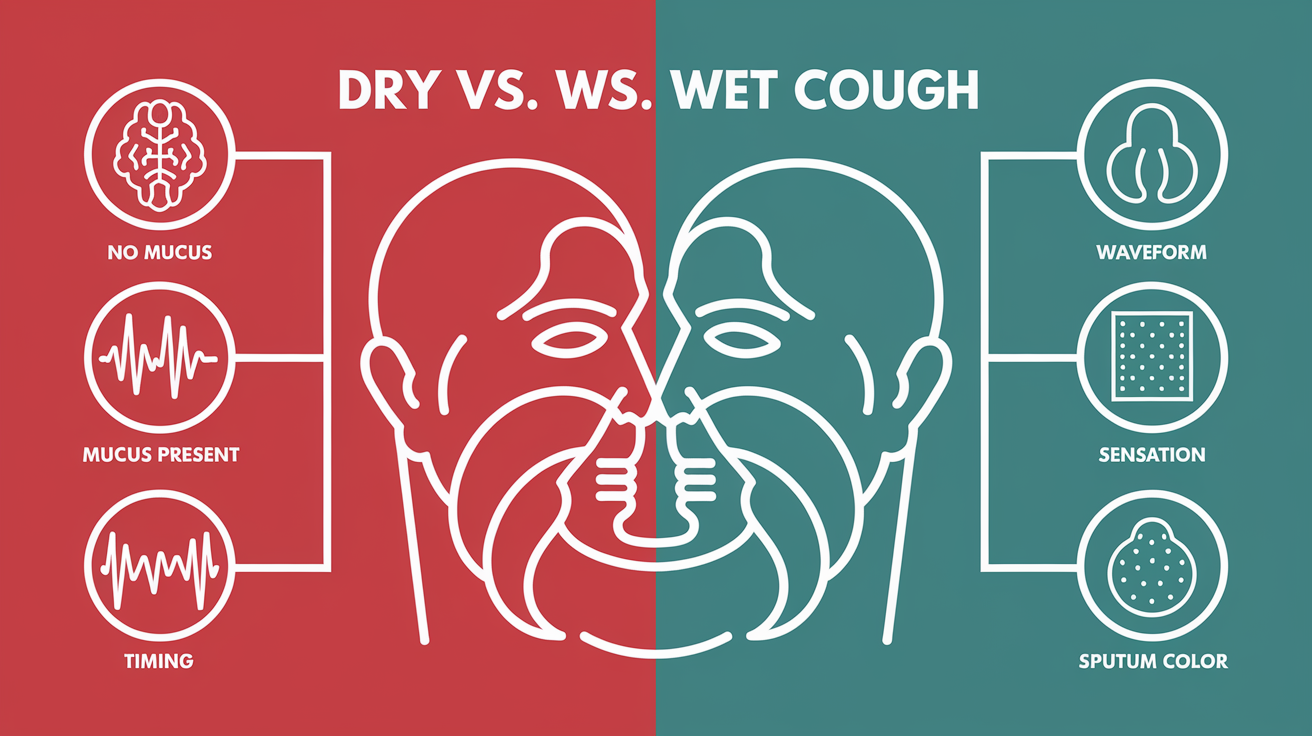
The easiest way to tell is to pay attention to what happens when you cough. If you feel a tickle or scratch in your throat and cough but nothing comes up (no phlegm, no mucus, nothing to spit out), it’s a dry cough. Dry coughs often get worse at night when you lie down, because irritation in your throat becomes more noticeable without the distractions of the day. They can come in long, hacking fits that leave your throat sore and your chest tired, but your lungs stay clear.
If you cough and feel mucus moving, hear a rattling or bubbling sound in your chest, or need to spit out phlegm afterward, that’s a wet cough. You might notice chest congestion (a heavy, full feeling) and sometimes a wheeze or gurgle when you breathe.
Another clue is the sound. Dry coughs tend to be sharp and high-pitched, almost like a bark or a repetitive hack. Wet coughs sound deeper, wetter, and more congested, like there’s fluid rattling around inside. If you’re coughing up sputum, look at the color. Clear or white usually means irritation or a viral infection, yellow or green can signal a bacterial infection, and any blood or rust-colored streaks require prompt medical attention.
If you’re not sure, try this: cough a few times and see if anything comes up or if you need to clear your throat afterward. If yes, it’s wet. If no, it’s dry.
Step-by-step way to identify your cough type:
- Cough a few times and pay attention to whether you produce any mucus or phlegm.
- Listen to the sound. Sharp and hacking suggests dry, rattly or gurgly suggests wet.
- Notice the sensation in your throat and chest. Tickle or scratch points to dry, heaviness or congestion points to wet.
- Check if your cough is worse at night or when lying flat (common with dry coughs) or if it’s worse in the morning when mucus has pooled overnight (common with wet coughs).
- Look at any sputum you produce. Color and consistency can help confirm a wet cough and guide whether you need to see a doctor.
Medical Conditions Associated With Dry vs. Wet Coughs

Dry coughs are commonly linked to conditions that inflame or irritate the airways without producing mucus. Allergies are a frequent culprit. Pollen, dust, pet dander, or mold can trigger an immune response that inflames your throat and bronchial tubes, leading to a persistent dry cough.
Asthma causes airway inflammation and constriction, often producing a dry, wheezy cough, especially at night or after exercise. Gastroesophageal reflux disease (GERD) sends stomach acid up into your esophagus and throat, irritating the lining and triggering a chronic dry cough that may not respond to typical cough treatments. ACE inhibitor medications, used to treat high blood pressure, are well known for causing a persistent dry cough in some people as a side effect.
Post-viral airway inflammation is another common cause. After a cold or flu, your airways can stay irritated and hypersensitive for weeks, producing a dry cough long after the infection has cleared.
Wet coughs are almost always tied to conditions that cause excess mucus production or fluid in the airways. Upper respiratory infections like the common cold and influenza are classic examples. Your body produces mucus to trap and expel the virus, and coughing is how that mucus gets out.
Bronchitis, an inflammation of the bronchial tubes, typically produces a wet cough with thick mucus that can be clear, white, yellow, or green depending on the stage and type of infection. Pneumonia, an infection of the lung tissue itself, causes a productive cough often accompanied by fever, chest pain, and sometimes bloody or rust-colored sputum.
Chronic obstructive pulmonary disease (COPD) leads to long-term mucus production and a persistent wet cough that can last for months or years, often worsening during exacerbations. Postnasal drip, where mucus from sinus infections or allergies drains down the back of your throat, can also trigger a wet cough as your body tries to clear that mucus from your airways.
A chronic cough (defined as lasting eight weeks or more) can be either dry or wet and requires medical evaluation to identify the underlying cause. Dry chronic coughs are often linked to asthma, GERD, or medication side effects. Wet chronic coughs usually point to ongoing infections, COPD, or other chronic lung conditions. The distinction matters because the treatment approach is completely different depending on whether you’re dealing with irritation or mucus production.
Home Remedies and Supportive Care for Dry vs. Wet Coughs

The goals of home care are different for dry and wet coughs, but hydration and rest help both. For a dry cough, your focus is on soothing the irritation and calming the cough reflex. Drink warm liquids like herbal tea, warm water with lemon, or broth. Warmth can ease throat discomfort and the liquid keeps your throat moist.
A spoonful of honey can coat and soothe your throat. It’s safe and effective for anyone over age one, but never give honey to infants under one year because of the risk of botulism. Using a cool-mist humidifier in your bedroom adds moisture to the air, which can prevent your throat from drying out overnight and triggering more coughing. Avoid smoke, strong fragrances, and other irritants that can make a dry cough worse.
For a wet cough, your goal is to keep the mucus thin and moving so your body can clear it out. Steam inhalation (sitting in a steamy bathroom for 10 minutes or leaning over a bowl of hot water with a towel over your head) can loosen thick mucus and make it easier to cough up.
A humidifier helps here, too, by keeping the air moist and preventing mucus from becoming sticky and hard to expel. Drink plenty of water throughout the day to stay hydrated. Thin mucus is easier to cough out than thick, sticky mucus. You can add ingredients like ginger, garlic, lemon, or turmeric to warm drinks for their anti-inflammatory and mucus-thinning properties.
Gargling with warm salt water four to five times a day can soothe a sore throat and clear mucus from the back of your throat. Rest is essential. Your body needs energy to fight infection and heal.
Specific remedies organized by cough type:
Honey (ages >1 year): soothes throat irritation, good for dry cough
Warm beverages (tea, lemon water, broth): hydrate and soothe, helpful for both types
Cool-mist humidifier: moistens airways, useful for dry cough and loosening mucus in wet cough
Steam inhalation: thins mucus, best for wet cough
Salt-water gargle: soothes throat and clears mucus, good for wet cough with postnasal drip
Hydration (water, warm liquids): keeps mucus thin and throat moist, essential for both types
Rest: supports immune function and recovery, critical for both dry and wet coughs
Over-the-Counter Medication Options for Dry vs. Wet Coughs
Over-the-counter cough medications fall into two main categories: suppressants and expectorants. Suppressants are designed to calm the cough reflex, making them appropriate for dry coughs that are exhausting, disruptive, or keeping you awake at night. The most common active ingredient in cough suppressants is dextromethorphan, found in products like Robitussin and others.
Dextromethorphan works on the part of your brain that controls the cough reflex, reducing the urge to cough even when your throat feels irritated. This can be helpful for a dry cough, but it’s not a good choice for a wet cough because suppressing the urge to cough means mucus stays in your lungs instead of being cleared out.
Expectorants are made for wet coughs. The active ingredient guaifenesin, found in products like Mucinex, works by thinning mucus so it’s easier to cough up and expel. Expectorants don’t stop the cough. They actually support it by making the cough more productive and effective. If you have a wet cough with thick, stubborn mucus, an expectorant can help you clear it faster.
Some combination products contain both a suppressant and an expectorant, but that doesn’t make much sense. You shouldn’t suppress a productive cough.
A critical safety note: cough and cold medicines are generally not recommended for children under age four. These medications can cause serious side effects in young children, and there’s limited evidence they actually help. If your child has a cough, talk to their pediatrician before giving any over-the-counter medication.
For older children and adults, always follow the dosing instructions on the package, and check for interactions if you’re taking other medications or have existing health conditions like high blood pressure, heart disease, or pregnancy.
| Medication Type | For Dry or Wet | Purpose | Active Ingredient |
|---|---|---|---|
| Cough suppressant | Dry cough | Calms the cough reflex | Dextromethorphan |
| Expectorant | Wet cough | Thins mucus to make coughing more productive | Guaifenesin |
| Decongestant | Either (if nasal congestion present) | Reduces nasal swelling and mucus production | Pseudoephedrine, phenylephrine |
| Antihistamine | Dry cough (from allergies or postnasal drip) | Reduces allergy-driven inflammation and mucus | Diphenhydramine, loratadine |
When a Dry or Wet Cough Requires Medical Attention

Most coughs clear up on their own within a couple of weeks, but certain symptoms and timelines mean it’s time to call a doctor. If your cough lasts longer than three weeks, get it checked out. Even if it doesn’t feel serious, a cough that lingers that long needs an explanation. A cough lasting eight weeks or more is considered chronic and requires a full evaluation to rule out conditions like asthma, GERD, chronic bronchitis, or other underlying problems.
Don’t wait three weeks if you have warning signs that something more urgent is happening.
Seek medical attention sooner (same day or urgent care) if you’re coughing up blood or blood-tinged mucus, even a small amount. Blood in your sputum can signal a serious infection, lung damage, or other conditions that need prompt diagnosis and treatment. Shortness of breath or difficulty breathing is another red flag, whether it comes with a dry or wet cough. If you feel like you can’t get enough air, your breathing is labored, or you’re wheezing, don’t wait.
Chest pain or tightness that gets worse when you cough or breathe deeply is also a reason to seek care right away. It could indicate pneumonia, a blood clot, or another serious issue. High fever (especially one that doesn’t come down with over-the-counter fever reducers) combined with a cough suggests a significant infection.
In children, a “barking” cough that sounds like a seal can indicate croup, which may require medical evaluation and treatment, especially if breathing becomes difficult.
Red-flag symptoms that mean you should seek medical care without delay:
Coughing up blood or blood-tinged mucus
Shortness of breath or trouble breathing
Chest pain or tightness, especially when coughing or breathing deeply
High fever that persists or worsens
Cough lasting more than three weeks
Severe fatigue, confusion, or dizziness accompanying the cough
How Coughs Change Over Time: Why Dry Coughs Can Follow Wet Coughs

It’s common (and confusing) for a cough to shift from wet to dry as an illness progresses. Here’s what’s happening: when you first catch a cold or respiratory virus, your immune system kicks into gear and produces mucus to trap and flush out the virus. That’s why you start with a wet, productive cough. You’re coughing up mucus because your body is actively clearing the infection.
After a few days to a week, the worst of the infection usually passes, your mucus production slows down, and the wet cough starts to ease.
But even after the mucus clears, your airways can stay inflamed and hypersensitive for days or even weeks. That leftover inflammation triggers a dry cough reflex. Your throat and bronchial tubes are still irritated, so you keep coughing even though there’s nothing left to clear out.
This post-viral dry cough can be frustrating because it feels like you should be better by now, but it’s a normal part of recovery. The inflammation takes time to settle down. The dry cough usually fades gradually over one to two weeks, though in some cases it can linger longer. If a dry cough persists beyond three weeks after a cold, or if it’s getting worse instead of better, that’s a reason to check in with a doctor to make sure something else isn’t going on, like asthma or a secondary infection.
Final Words
You’re right in the middle of figuring out whether a cough is dry or wet: listen for a tickle or a rattling sound, check for mucus, and note when it happens. This piece walked through key differences, common causes, how to tell them apart, related conditions, safe home care, over-the-counter options, red flags, and how coughs can change over time.
If you’re unsure about dry cough vs wet cough, keep a log—sound, mucus color, timing—and try the simple care steps we listed. If red flags appear, get checked. You’ll gain clarity and often feel better with small steps.
FAQ
Q: Is it better to have a dry cough or a wet cough?
A: Whether a dry or wet cough is better depends on the cause; a wet cough often helps clear mucus, while a dry cough is more irritating and may linger. See a clinician if it’s severe or lasting.
Q: What does a dry cough indicate?
A: A dry cough indicates a nonproductive, scratchy throat with no mucus brought up, often from irritation, allergies, reflux, asthma, ACE inhibitors, or post‑viral inflammation. Check a clinician if it lasts beyond three weeks or worsens.
Q: Does RSV sound like a wet cough?
A: RSV often presents as a wet, rattly cough with mucus and noisy breathing, especially in infants and young children. It can cause wheeze, fever, or feeding trouble—seek same‑day care for breathing problems.
Q: Does a dry cough mean you’re getting better?
A: A dry cough doesn’t always mean you’re getting better; it can follow a wet cough once mucus clears because airway inflammation lingers for days to weeks. Seek care if it worsens or lasts beyond three weeks.