
Tired of eczema turning your nights into a scratch-fest?
You’re not alone; nighttime flares steal sleep and make mornings worse.
This guide shows quick, safe ways to calm late-night itching right now.
You’ll learn fast fixes like cold compresses and seal-in moisturizers, better bedtime routines and bedding choices, and simple overnight protections like wet wraps and cotton gloves.
I’ll also help you spot triggers to stop flares before they start.
Read on and get a plain plan to sleep better and wake with less damage.
Immediate Nighttime Eczema Relief Methods
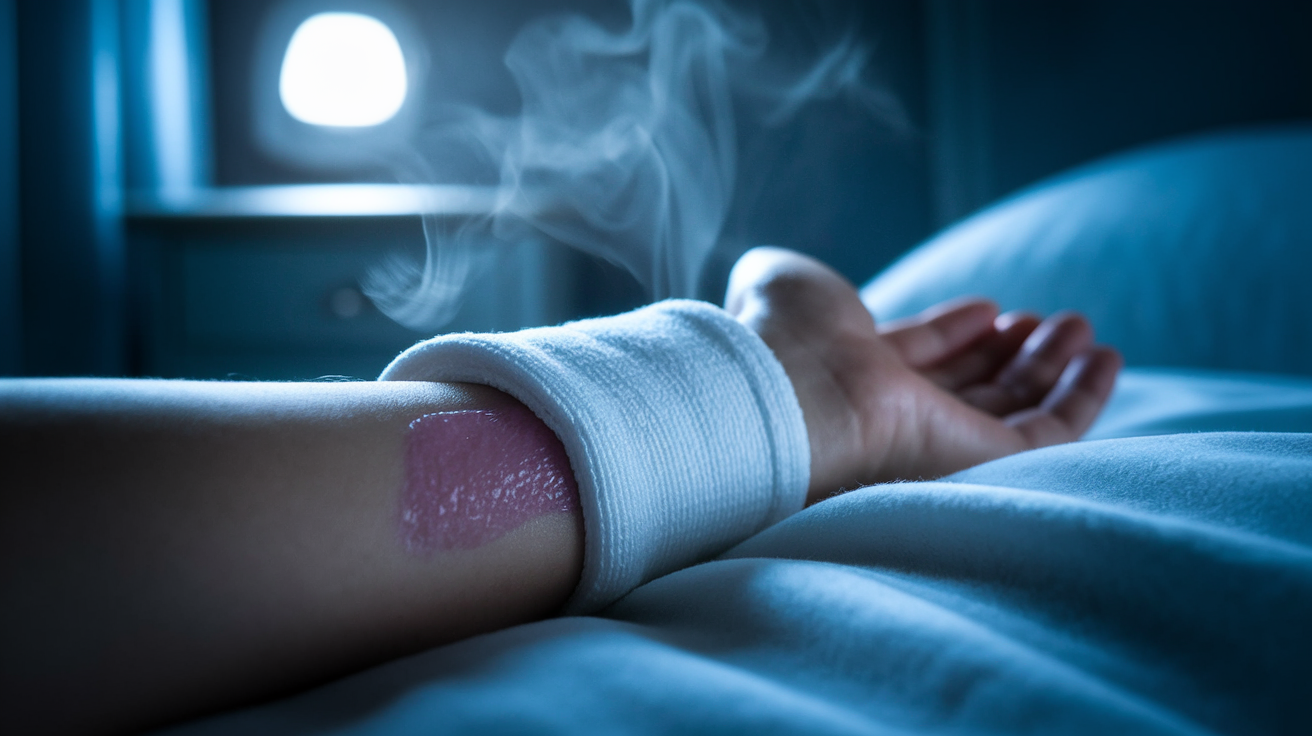
When eczema itch hits at night, you need relief fast. Grab a cold compress first. Wrap some ice cubes in a clean cotton towel or run a washcloth under cold water, then press it gently against the itching spot for 5 to 10 minutes. Cold brings down inflammation within minutes by slowing the nerve signals that carry itch sensations to your brain. It also drops your skin temperature, which can quiet the histamine driven itch that tends to peak after dark.
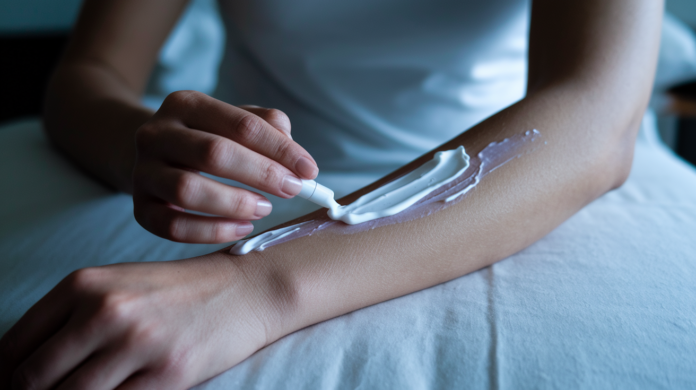
Next step is applying a heavy moisturizer or occlusive ointment while your skin’s still slightly damp from the compress. Thick products like petroleum jelly or ceramide rich creams work overnight to repair your skin barrier and lock in moisture. You can layer an anti itch cream underneath if the itch is severe. Ingredients like hydrocortisone or pramoxine calm irritation quickly. Once you’ve sealed your skin, adjust your bedroom to support relief through the night.
Your bedroom should work for you, not against you. Keep the temperature cool, around 65 to 68°F (18 to 20°C), to prevent sweating. Sweating can trigger more itching. If the air feels dry, run a humidifier to keep humidity between 40 and 60 percent. Dry air increases transepidermal water loss, which means your skin loses moisture faster overnight. Small changes to your room can make a big difference in how much you scratch before morning.
Here’s what to do right now when a nighttime flare hits:
- Apply a cold compress for 5 to 10 minutes to calm inflammation and numb itch signals.
- Pat skin dry gently, then layer a thick emollient or occlusive ointment to seal in hydration.
- Use an anti itch cream with hydrocortisone or pramoxine if itching is intense.
- Lower your bedroom temperature to reduce sweating and histamine release.
- Turn on a humidifier if your room feels dry or static.
- Wear cotton gloves or socks on your hands to prevent scratching damage while you sleep.
If you wake up scratching, repeat the compress and reapply your eczema cream before going back to bed. It’s okay to do this routine more than once in a night during a bad flare. The goal is to break the itch scratch cycle before it damages your skin further.
Effective Topical Treatments for Nighttime Flares
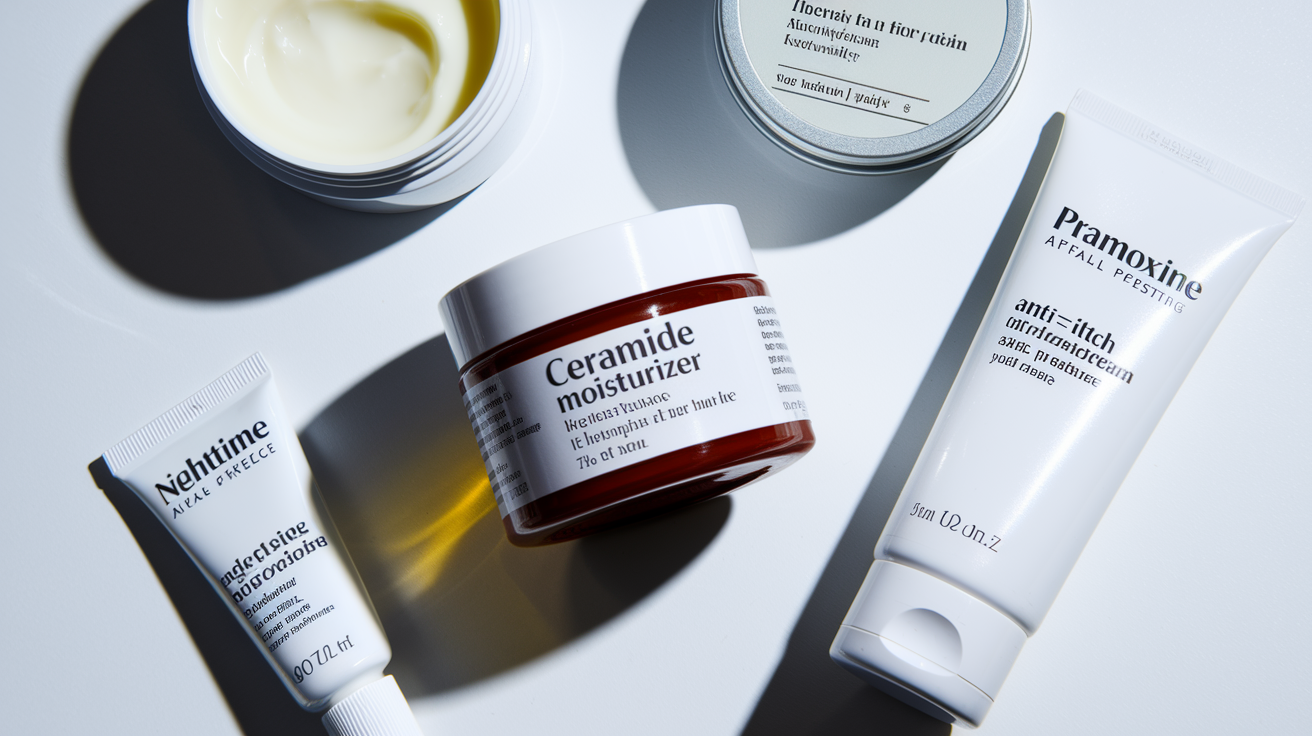
Topical treatments are your nighttime defense line, and choosing the right product depends on what your skin needs most. Hydrocortisone cream is a low strength steroid that reduces inflammation and calms itch within hours. You can buy 1% hydrocortisone over the counter. Apply a thin layer to flare areas right before bed, but don’t use it on broken or weeping skin without asking a clinician first. If over the counter hydrocortisone isn’t enough, your doctor can prescribe a stronger steroid for short term use during severe flares.
Ceramide based moisturizers strengthen your skin barrier by replacing lipids that eczema strips away. Look for products labeled “eczema therapy” or “barrier repair” that list ceramides high in the ingredient list. These work best when applied within 3 minutes of bathing or after a damp compress, when your skin is primed to absorb them. Occlusive ointments like petroleum jelly sit on top of your skin and trap moisture inside. They can reduce overnight water loss by up to 98 percent. Use them as the final layer after any medicated creams.
Antihistamine creams may reduce itch sensations, but they work less consistently than cold compresses or hydrocortisone. Some people find them helpful for mild itching, while others see little benefit. If you want to try one, apply it before your heavy moisturizer so it can reach the skin first.
| Product Type | How It Helps |
|---|---|
| Hydrocortisone cream (1%) | Reduces inflammation and calms itch; safe for short term nightly use. |
| Ceramide moisturizer | Rebuilds the skin barrier and prevents moisture loss overnight. |
| Petroleum jelly or occlusive ointment | Seals in hydration and blocks up to 98% of water loss during sleep. |
| Pramoxine anti itch cream | Numbs nerve endings to reduce itch sensations quickly. |
| Prescription steroid ointment | Stronger anti inflammatory for severe flares; use only as directed by your doctor. |
Bedtime Routines That Reduce Overnight Itching

A consistent bedtime routine trains your skin and your body to expect relief, which can lower flare frequency over time. Start with a 10 to 15 minute lukewarm bath. Water should feel warm on your wrist, not hot. Hot water strips natural oils and worsens dryness. Add colloidal oatmeal to the bath if you have it. It coats the skin and reduces irritation. Pat yourself dry with a soft towel right after, leaving your skin slightly damp, then immediately apply your medicated cream or moisturizer. This “soak and seal” method works because damp skin absorbs products better than bone dry skin.
Timing matters. You have about 2 to 3 minutes after drying to get your moisturizer on before your skin starts losing water again. Set your products on the bathroom counter so you can reach them fast. If you need to apply a prescription steroid, do that first while skin is still damp, then layer a thick emollient or petroleum jelly over the top to lock everything in. This layering sequence keeps medicine on your skin instead of rubbing off onto your sheets.
Do this routine at the same time every night, even on days when your skin feels calm. Consistency prevents flares from building up, and your skin barrier gets stronger when it’s supported every single night. If you skip nights, your skin loses ground and flares come back faster.
Fabrics, Bedding, and Temperature Choices
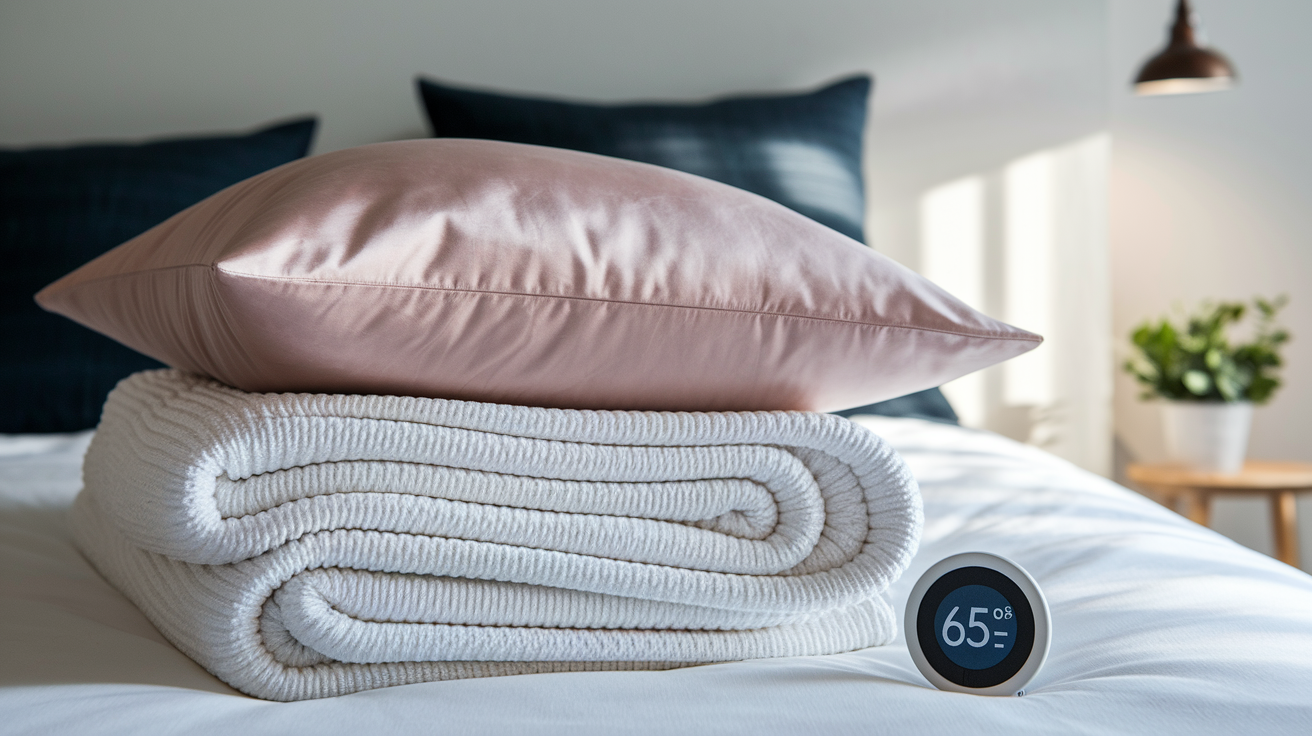
The fabrics touching your skin at night can either soothe or irritate a flare. Cotton and bamboo are your safest bets. They’re soft, breathable, and less likely to trap heat or cause friction. Choose 100% cotton sheets and pillowcases, and check that your pajamas are also natural fiber. Silk pillowcases have been shown in trials to reduce eczema severity, probably because silk is smooth and doesn’t pull at the skin when you move in your sleep.
Avoid wool directly against your skin, even though some wool bedding is marketed as moisture wicking. Wool fibers can feel prickly and worsen itching for many people with eczema. Synthetic fabrics like polyester, fleece, and nylon trap heat and moisture, which raises your skin temperature and triggers more histamine release. If you love a weighted blanket, make sure the cover is cotton and that the blanket isn’t so heavy that you overheat under it.
Your bedroom temperature is just as important as your bedding. Keep the room between 65 and 68°F (18 to 20°C) if you can. Cooler air reduces sweating and keeps your skin from warming up overnight. Every degree of extra warmth can amplify itch perception. Use a fan or AC instead of piling on blankets, and wash your sheets weekly in hot water at 130°F (54°C) to kill dust mites.
Here’s what to choose for your sleep environment:
- 100% cotton or bamboo sheets and pillowcases (or silk for extra smoothness).
- Cotton pajamas with long sleeves and long pants to reduce scratching access.
- Natural fiber duvets or comforters; avoid synthetic fills that trap heat.
- A cool bedroom set to 65 to 68°F and a humidifier if the air is dry.
Overnight Protection Techniques
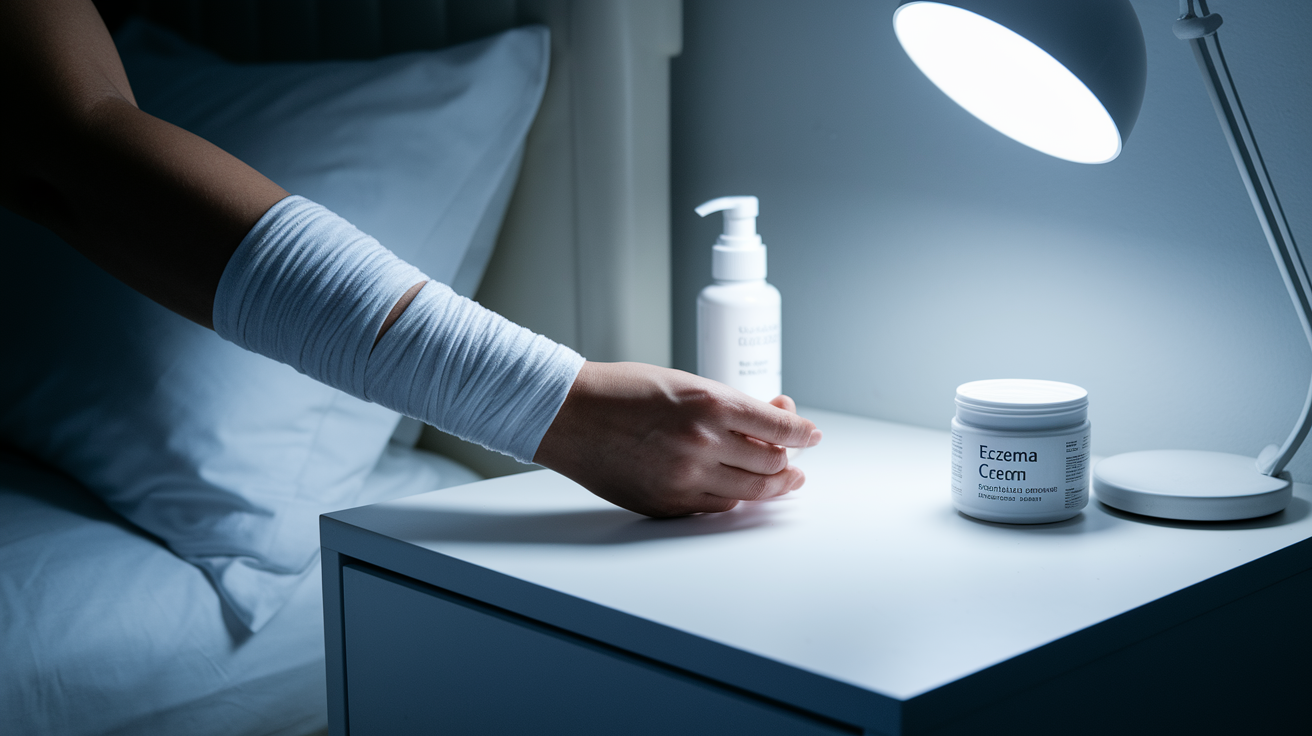
When flares are severe, you need more than moisturizer. You need a barrier that keeps treatment on your skin and your hands away from it. Wet wrap therapy is one of the most effective overnight methods. After your bath and moisturizer routine, dampen a layer of cotton clothing or gauze bandages with lukewarm water, wrap them snugly (but not tight) around flare areas, then cover with a dry cotton layer. Wet wraps boost hydration and have been shown to reduce eczema severity scores by 50 to 70 percent within a few days. They work by keeping your skin moist and your topical treatments in place all night long.
If wet wraps feel too complicated, start with cotton gloves or socks over your hands. Nighttime scratching often happens without waking up. Studies using wrist sensors show that people with eczema scratch an average of 16 to 20 minutes per hour of sleep. Gloves act as a physical barrier so even if you scratch, your nails can’t break the skin. Keep your nails trimmed every few days, and file any sharp edges smooth. Long nails turn scratching into gouging, which leads to infection and longer healing times.
For isolated flare spots, you can use a protective dressing like a soft bandage or medical tape over the area after applying your eczema cream. This keeps the treatment from rubbing off and stops you from reaching the spot unconsciously. Just make sure any dressing is breathable. Airtight wraps can trap sweat and make things worse.
Managing Triggers That Worsen Nighttime Flares
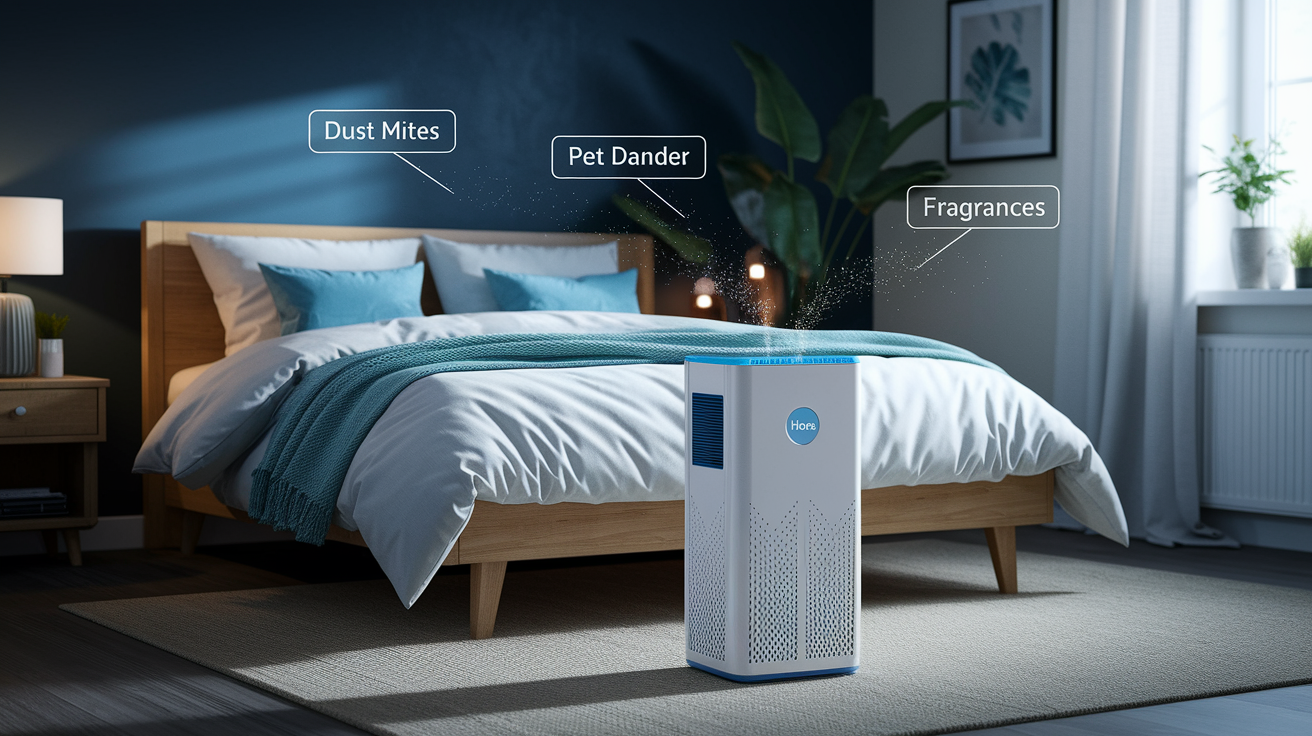
Nighttime eczema doesn’t happen in a vacuum. Flares often spike at night because your body’s circadian rhythm lowers cortisol between midnight and 4 a.m., which removes your natural anti inflammatory protection. On top of that, environmental triggers pile up in your bedroom. Dust mites thrive in warm, humid bedding. Pet dander settles on pillows. And stress hormones from the day keep your immune system fired up even after you lie down.
Common triggers that make nighttime eczema worse include:
- Dust mites in mattresses, pillows, and bedding (they love humidity above 60%).
- Pet dander, pollen, or mold spores on sheets and in bedroom air.
- Fragrances in laundry detergent, fabric softener, or air fresheners.
- Stress, anxiety, or a racing mind that keeps your body in a heightened state.
- Sweat from too warm pajamas, heavy blankets, or a heated bedroom.
To reduce these triggers, wash your sheets and pillowcases weekly in hot water with a fragrance free detergent. Skip the fabric softener entirely. Use allergen proof covers on your mattress and pillows if dust mites are a known problem. Run a HEPA air purifier in your bedroom to pull out airborne particles, and keep pets out of the bedroom if you notice flares after they’ve been on your bed. If you see or smell mold anywhere in your room, address it right away. Mold is a potent trigger and a sign that humidity is too high.
Stress is harder to control, but adding a short wind down routine before bed can help. Try 10 minutes of reading, stretching, or slow breathing to signal your body that it’s time to calm down. Lowering your stress response even a little can reduce flare intensity overnight.
Long Term Strategies to Reduce Recurring Nighttime Eczema
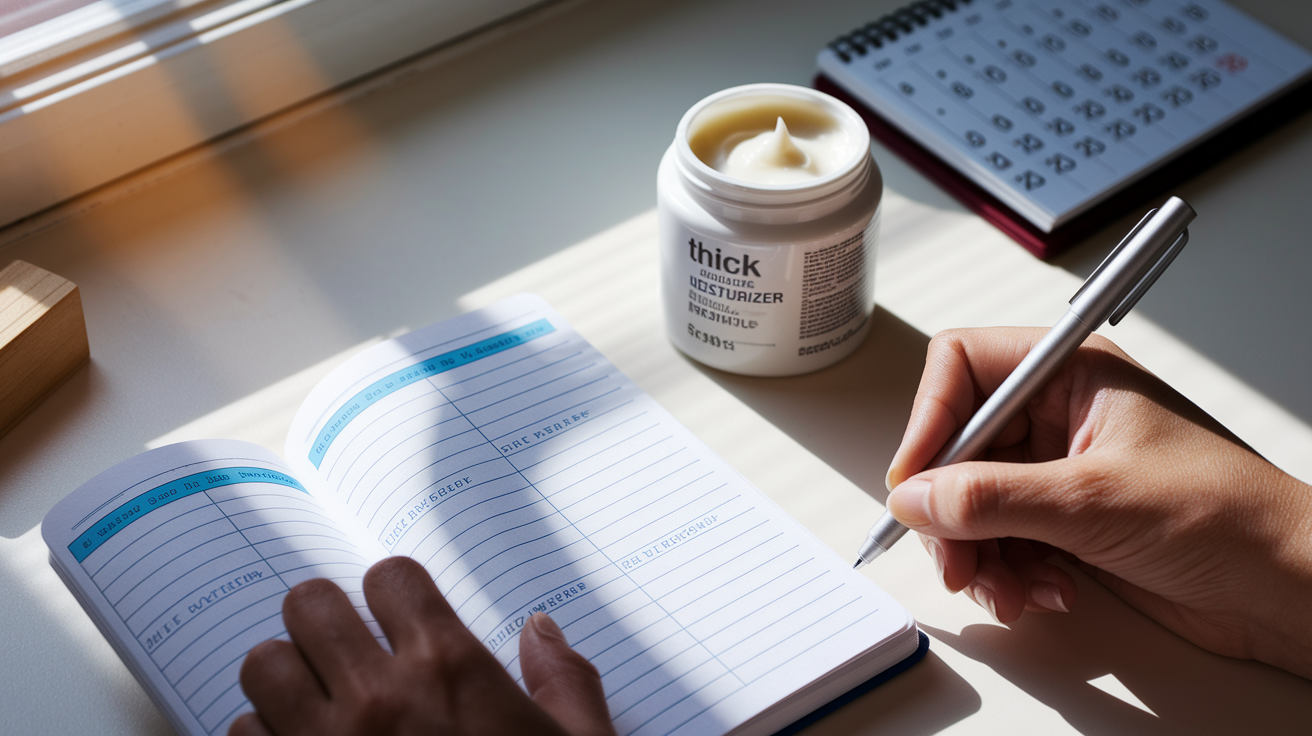
Short term relief gets you through tonight, but long term strategies make flares less frequent and less severe over weeks and months. The foundation is consistent moisturization. Apply a thick emollient or eczema cream at least twice a day, every single day, even when your skin looks clear. This routine keeps your skin barrier strong so it’s harder for irritants and allergens to break through. Skipping days lets cracks form, and once your barrier is compromised, flares come back fast.
Identifying your specific triggers is the next step. Keep a simple journal for a couple of weeks. Write down what you ate, what products you used, how stressed you felt, and when flares happened. Look for patterns. Maybe you notice flares after eating dairy, or after using a new laundry detergent, or on nights when you stayed up late. Once you know your triggers, you can avoid them or plan extra barrier care on days when exposure is unavoidable. If you’re not sure where to start, your doctor can refer you for patch testing to identify contact allergens like fragrances, preservatives, or metals.
Lifestyle adjustments also matter. Keep a consistent sleep schedule so your circadian rhythm stabilizes. Going to bed and waking up at the same time every day helps regulate cortisol and reduces nighttime inflammation. Avoid screens for at least an hour before bed, because blue light can delay melatonin release and keep you wired when you should be winding down. Limit caffeine at least 6 hours before bedtime so it doesn’t interfere with deep sleep, which is when your skin does most of its repair work.
If you’ve built a solid routine and you’re still waking up scratching most nights, it’s time to talk to a dermatologist. Prescription treatments like stronger topical steroids, non steroidal creams that target specific itch pathways, or even short term oral medications can break a stubborn flare cycle. Don’t wait until your skin is severely damaged or infected. Early intervention makes long term control easier and faster.
Final Words
Try a cooling compress, slather on a thick moisturizer or anti‑itch product, and cool your bedroom to calm itching tonight.
This guide walked through fast nighttime eczema relief, topical choices, bedtime routines, fabric and bedding tips, overnight protection, trigger control, and longer-term ways to reduce repeat flares.
If symptoms stay bad or get worse, schedule a clinician visit. Otherwise, pick two tactics to try and keep a short symptom journal.
Use these practical steps for nighttime eczema flare relief, stay consistent, and expect gentler nights ahead.
FAQ
Q: How to stop eczema flare up overnight?
A: Stopping an eczema flare overnight usually means cooling the skin, locking in moisture, and reducing itch: apply a cool compress, use a thick moisturizer or occlusive, try a short-term anti-itch cream, keep the room cool, and avoid scratching.
Q: What is the 3 minute rule for eczema?
A: The 3 minute rule for eczema means applying moisturizer within three minutes after bathing to trap water in the skin, help the barrier repair, and reduce overnight itch; do this every night and after showers.
Q: Why does my eczema only flare at night?
A: Eczema may flare only at night because body temperature and natural itch signals rise, you sweat or rub bedding, and you notice itch more when quiet; track patterns, cool the room, and treat itch early.
Q: What stops eczema itch immediately?
A: Stopping eczema itch immediately often starts with a cool compress and steady pressure, then apply a gentle anti-itch product such as low-strength hydrocortisone or pramoxine if suitable; avoid scratching and see a clinician if it continues.